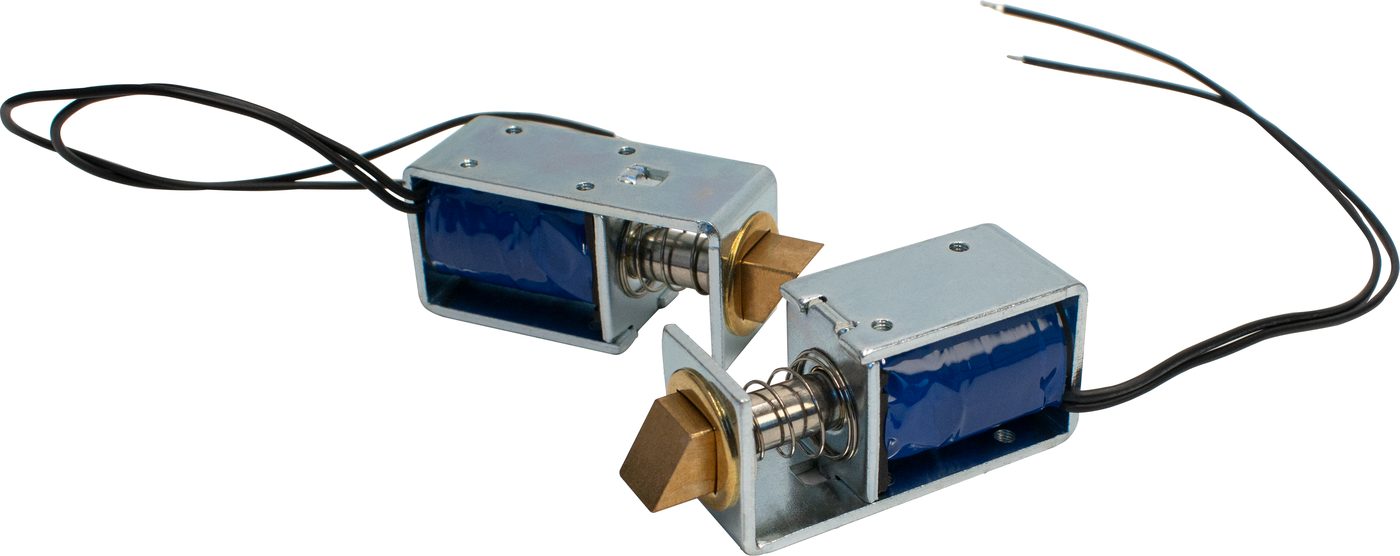
EV charging inlet and connector locks, battery-swap locks, glovebox, console, seat and tailgate latches, coolant and air valves, and actuators inside EV ancillary units. Parts see vibration, −30 to 85 °C ambient swing, and must work at 9 V when the engine is cranking.
| Supply voltage | Must operate down to 9 V and survive 16 V load dump |
|---|---|
| Ambient | −30 °C to +85 °C with condensing humidity |
| Cycle life | Typically 50k–200k operations over vehicle life |
| Typical choice | Tubular or push-pull solenoid, sealed coil |
These are the ranges that come up most often in enquiries for this application. They are a starting point for discussion, not a specification — the numbers that matter are the ones from your mechanism.
Doubling the force in the same envelope usually means a larger coil and more heat. If the space is fixed, the honest answer is sometimes a different mechanism.
A faster actuation is louder. End-stop damping, a softer return spring or a reduced drive voltage all trade response time for acoustic performance.
Bearing surfaces, plunger coating and spring quality set the life. These are the first things a low-cost quote removes.
A feedback switch adds cost and a wire, but tells the controller the bolt actually moved. Without it, "locked" is an assumption.
Open-frame U0854L/S
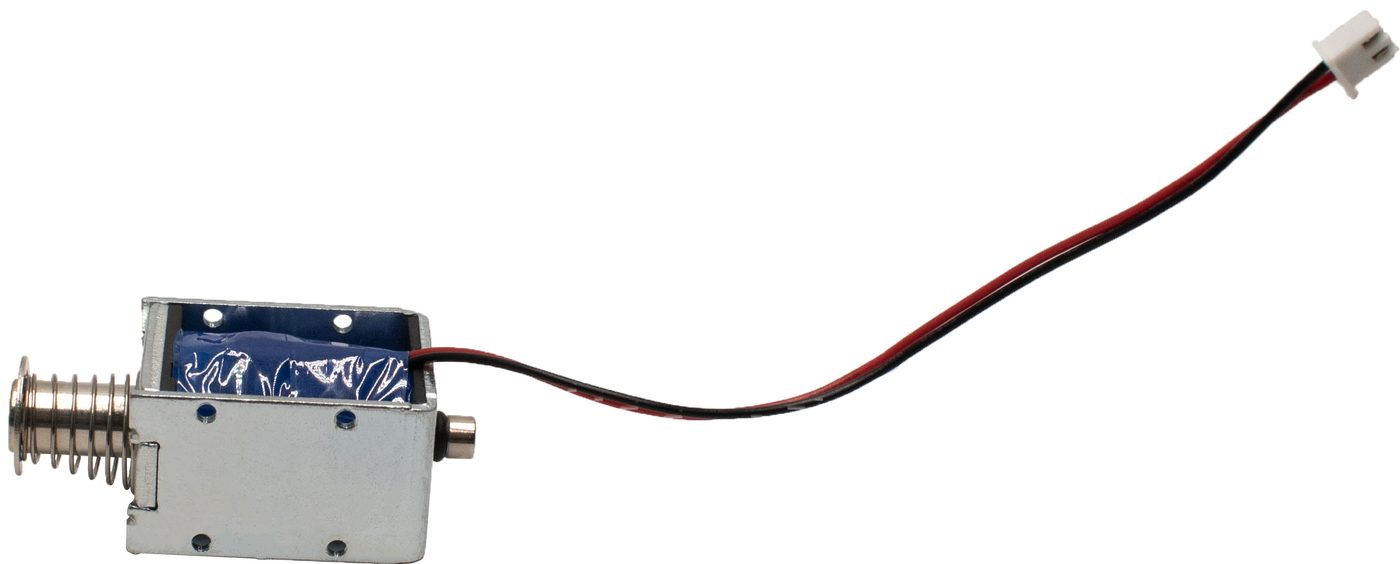
Open-frame U1040L/S
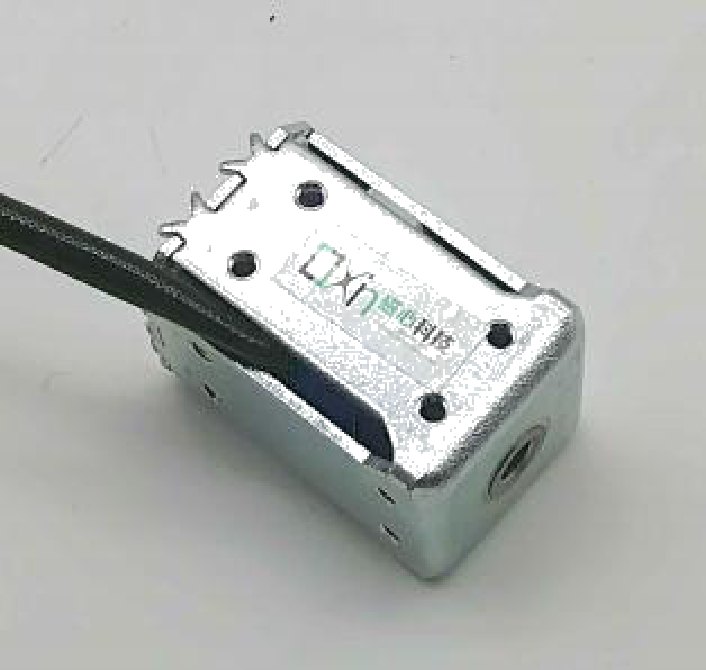
Self-holding KY0940L/S
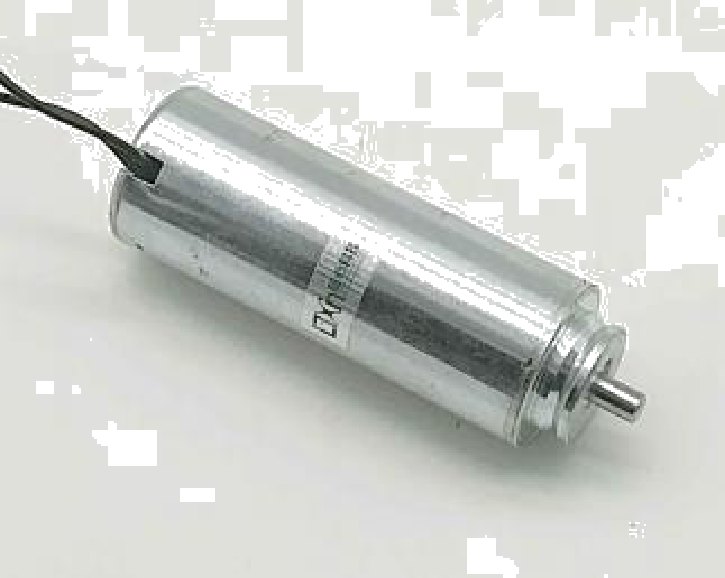
Tubular T2875L/S
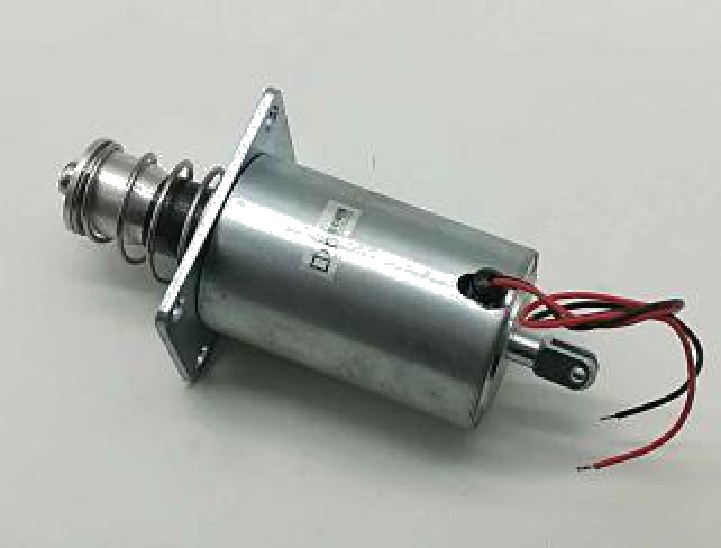
Tubular T4577L/S
The coil is wound for the lowest voltage that must close the mechanism; at higher voltage the duty cycle is limited or the drive PWMs the current. Tell us both conditions and we will size the winding for the worst one.
The solenoid is mounted as it will be in the vehicle and swept on a shaker table; the report records force before and after. The mounting method matters as much as the part, so we test your mounting, not ours.
Yes. The same families cover actuators and valves in conventional 12 V systems; the EV-specific part is usually the higher ambient and the interlock logic.
Send the mechanism constraints and an engineer will propose a type, a coil and a sample plan.