Server rack and cabinet door locks, PDU and breaker actuation, RF switch and filter positioners, antenna alignment and equipment ejection mechanisms. Precision and repeatability of the end position matter more than force, and the part must not disturb the thermal design of the cabinet.
| Motion | Rotary or short linear stroke with a defined detent |
|---|---|
| Repeatability | End position repeatable within a few hundredths of a mm |
| Power budget | Low duty; often PoE or 12 V rail inside the rack |
| Typical choice | Rotary or tubular solenoid with position feedback |
These are the ranges that come up most often in enquiries for this application. They are a starting point for discussion, not a specification — the numbers that matter are the ones from your mechanism.
Doubling the force in the same envelope usually means a larger coil and more heat. If the space is fixed, the honest answer is sometimes a different mechanism.
A faster actuation is louder. End-stop damping, a softer return spring or a reduced drive voltage all trade response time for acoustic performance.
Bearing surfaces, plunger coating and spring quality set the life. These are the first things a low-cost quote removes.
A feedback switch adds cost and a wire, but tells the controller the bolt actually moved. Without it, "locked" is an assumption.
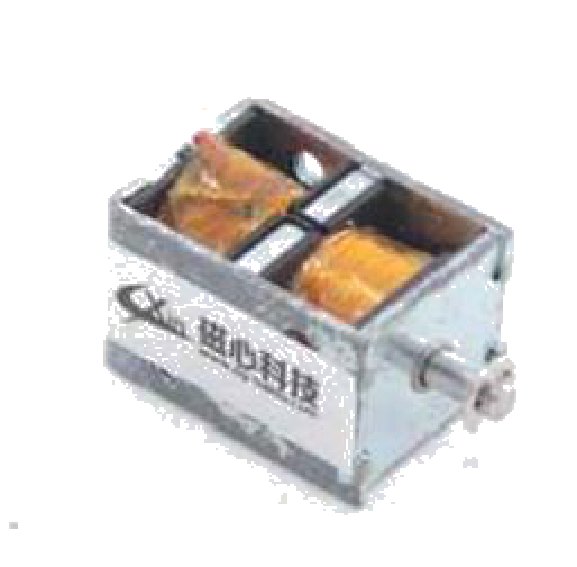
Bi-stable latching KS0521L/S
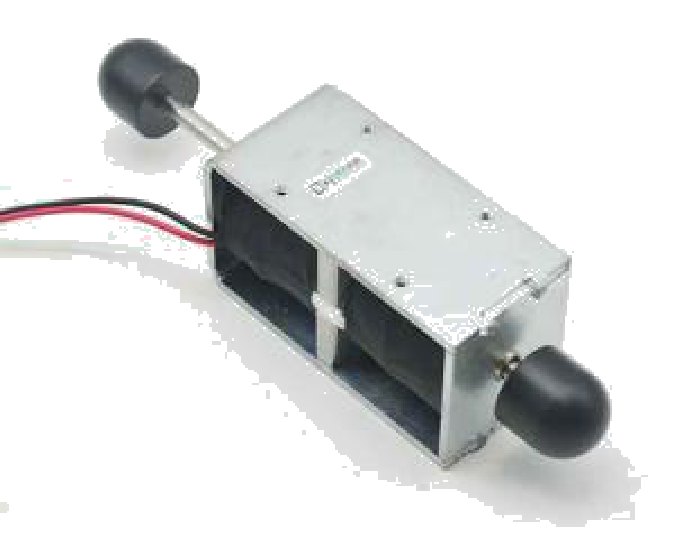
Bi-stable latching KS1895L/S
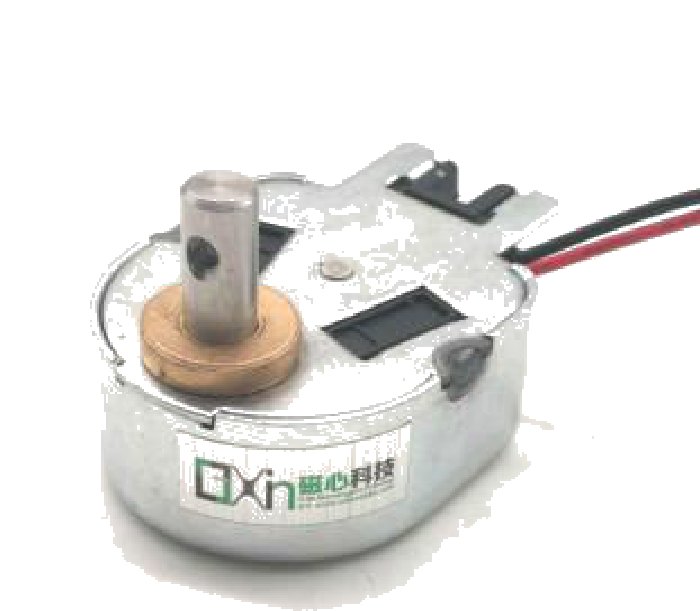
Rotary SW3235L
Rotary XZ3524L
Rotary XZ3018L
Enough to clear the strike plate under load, plus 1–2 mm of margin. Most cabinet and locker bolts land between 5 and 12 mm; electronic deadbolts are often 3–8 mm. Measure the worst-case mechanical clearance, not the nominal.
Yes, if the holding state draws no current. A latching design holds magnetically after a short pulse, so the energy per operation is the pulse only. A spring-return design that stays energised will flatten a small battery in weeks.
That is a design decision, not a solenoid property. Fail-secure holds the door locked with no power; fail-safe releases it. Latching types can be built either way, and both usually need a mechanical release for service access.
It depends on load, stroke and the impact at the end stop — a number without those conditions is marketing. Ask for the cycle test report with the load and stroke stated.
Send the mechanism constraints and an engineer will propose a type, a coil and a sample plan.